Austin Small Business Bookkeeping AlternativeThe May report when the bill is zero.
The franchise report is still due in May when the computed bill is zero. Steven Palmieri, a Tax CFO, prepares that report from the same months the bank already matched.
Owners skip the May report for a human reason. Software showed a zero tax, the year felt small, and a filing with nothing due looked optional. It is not optional. The report is due on 15 May for report years 2026 and 2027 even when no tax is due. A missed zero is still a missed report, and the letter that follows does not mention that the bill was nothing.
For the report years on this page, the Comptroller's no-tax-due line sits at two million six hundred fifty thousand dollars. Under that line, many shops compute to zero and still file. Over it, the rate depends on the business. A retail or wholesale shop is figured at 0.375 percent for those report years. A shop in another line is figured at 0.75 percent. We use the rate for the year being filed, and we do not borrow last year's rate because it was handy.
We prepare the report with the books, after the months that feed it have been named. You sign it. A computed zero still gets the May report prepared and put in front of you to sign. The relief, if you have felt the other kind of May, is knowing the date is on the calendar in March rather than discovered in a notice.
Sales tax inside the city limits
The combined sales tax inside the city limits is 8.25 percent. The state slice is 6.25 percent. Inside the city limits the municipal slice is 1 percent, local code 2227016. Capital Metro's piece is the other 1 percent, and the Comptroller lists that piece as local code 3227999. That stack is the Comptroller's figure. We look it up for the location rather than remembering a rate from a different year.
Each period's sales-tax filing lands on the 20th. Summer does not move it. A Saturday when the springs are full still leaves the 20th where the calendar put it. Tax you collected is not profit, and it should not be sitting in the operating balance as if it were. During the close we split it out of the deposit so the 20th is a payment of money already set aside.
If more than one place collects tax, the rate follows the place, not the brand on the door. A second register across a city line can carry a different local piece. Before any percent lands on a deposit, we pin that sale to the counter where it happened. One remembered percent, applied everywhere, is how a year of small differences becomes a letter.
What we do with a May report
The main school district covers 73.37 percent of the blocks inside the city limits. Open the 2025 workbook row and the combined rate printed there is 0.9252 for each 100 of taxable value. Maintenance and operations is 0.8022. Interest and sinking is 0.123. The Comptroller publishes that workbook, and these four numbers are copied from the district's own row. They describe the district, not a bill for one address, and a property you own may sit in a different district entirely.
Business personal property, the furniture and the equipment, is ordinarily listed for the county on 15 April. Ask in writing and that property list can move from the April date onto 15 May. Inventory sits on the same list. We remind you of the day during the spring close. We do not invent a value for a shop we have not seen, and we do not print a client's list on this page.
Public dates are only useful if the month they belong to is already named. A May report built on a guess about February is how a zero becomes a correction. We would rather close February late than file May early. The letter people dread is the one that arrives when nobody can point at the month.
The dome, and the report that still leaves
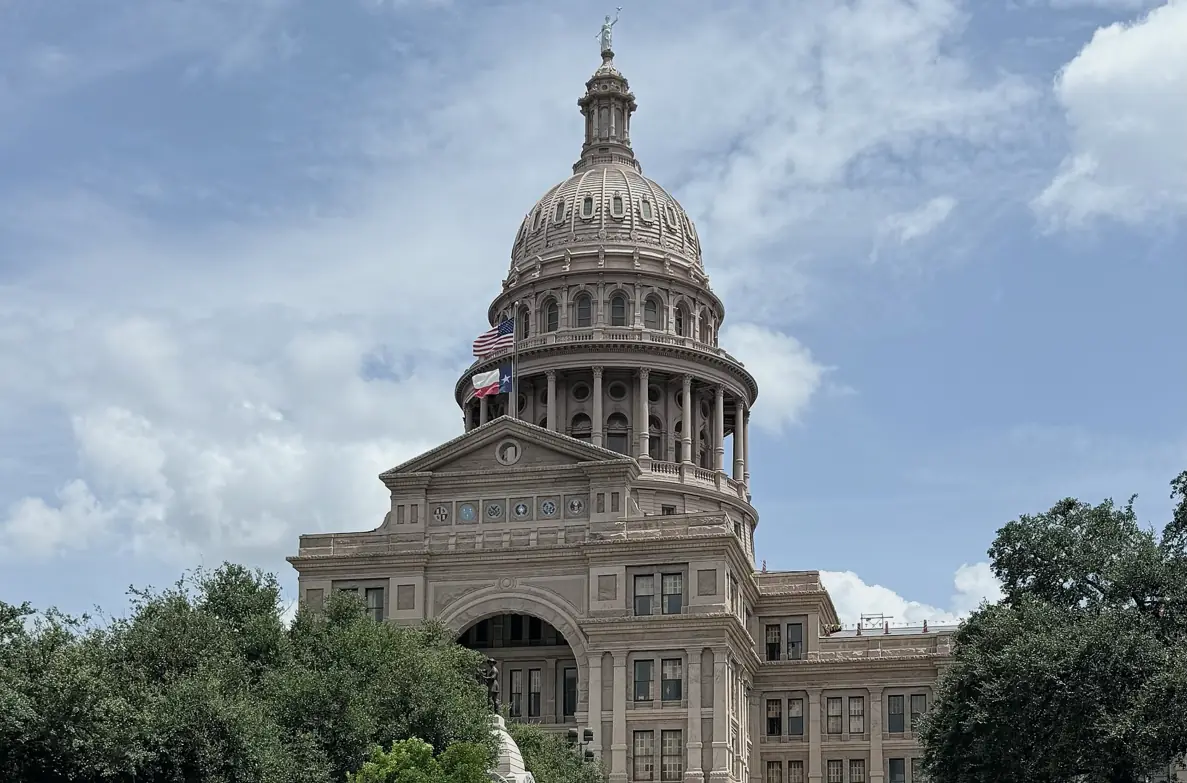
The pink granite dome of the Texas State Capitol is where the Legislature meets, and pride in that building is easy from anywhere in the state. We are all Texans on that, and we are not on those grounds. We still treat 15 May as a real day. A report that computes to zero gets prepared with the same care as one that does not, because the date is the point and the bill is the result.
Pride in that building is easy from anywhere in the state. The work tied to it, for a shop, is less romantic and more useful. Know which report is yours, know the rate that applies, and know that a quiet year still gets a filing. That is the sentence we want you to leave with.
A signed opinion for a lender, if one is demanded later, sits outside this close. The full boundary lives on the disclosures page, and this page does not redraw it. Here the work is the monthly match, sales tax set aside, the May report, and a return from months you have already seen.
Bring the worry with you. If the worry is a May report you skipped in a year when the bill was zero, say the year. If the worry is sales tax that was spent because the deposit looked like profit, say the month you think it started. We can tell a true start from a guess, and we will not build a filing on the guess just because the date is close.
We print the workbook numbers so you can see where a figure on this page came from. A workbook rate describes the district as a whole and never becomes the tax bill for the building you own. A boundary can change the rate a block away. We do that lookup ourselves. A neighbor's memory of last year's percent is not a source. The lookup is a minute. A year booked at the wrong percent is a season of repair, and the letter still comes.
Ask about the May report
You will be talking to the Steven Palmieri practice.